In a world dominated by digital marketing, social media ads, and mobile notifications, it is easy to assume that traditional signage has lost its value. But that is far from true. Yard Signs remain one of the simplest, most affordable, and most effective tools for local visibility. Whether you are promoting a home for sale, supporting a candidate, advertising a weekend event, or attracting attention to a neighbourhood business, yard signs still deliver something that digital channels often cannot: immediate street-level exposure.
For businesses, organisations, real estate agents, event planners, schools, and political campaigns, yard signs offer a practical form of outdoor advertising that is direct, low-cost, and easy to deploy. They do not require a complicated setup, a large budget, or advanced marketing software. Instead, they work by putting your message where people already are—driving, walking, commuting, shopping, or attending community events.
This guide explains exactly what yard signs are, how they are used, the different types available, their materials, benefits, design principles, and how they fit into a broader local marketing strategy. If you have ever wondered whether yard signs are worth using, how they support brand visibility, or which style is best for your needs, this article will give you a clear answer.
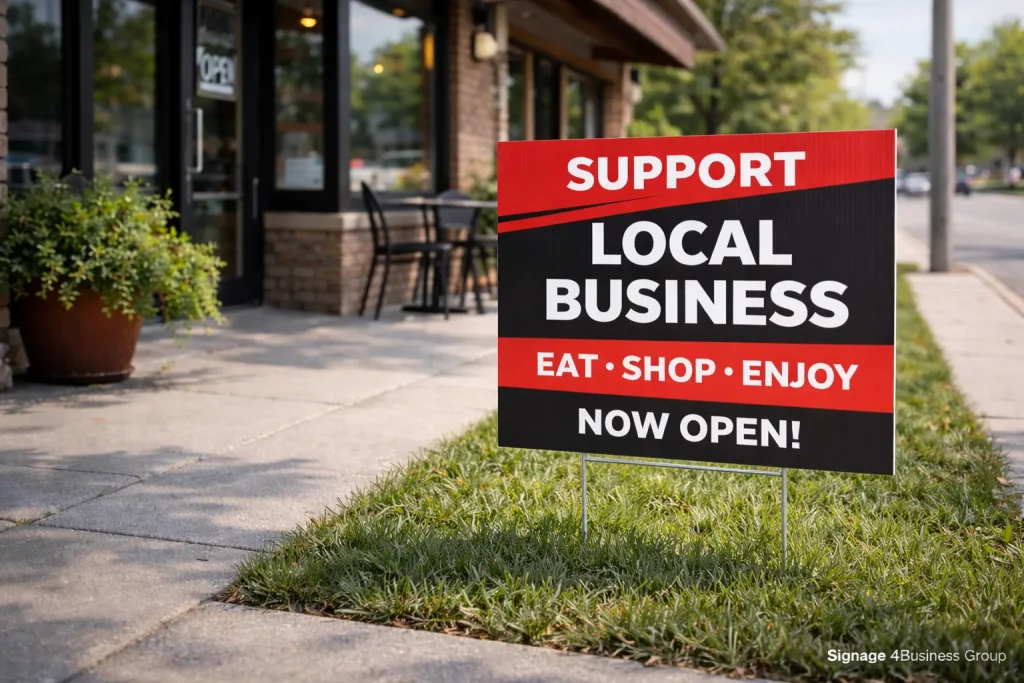
What Are Yard Signs?
At the most basic level, Yard Signs are small temporary signs designed for outdoor use. They are usually placed in the ground with stakes or frames and used to display a short message to people passing by. Because they are affordable, lightweight, and easy to install, they have become a go-to choice for local promotion and community messaging.
You may also hear them called lawn signs, especially in residential or campaign settings. In many cases, the terms custom lawn signs and yard signs are used interchangeably. These signs can be printed for one-time events, seasonal promotions, political campaigns, property sales, or ongoing neighbourhood awareness.
What makes yard signs so effective is their simplicity. They are a form of visual communication built around one clear purpose: grab attention quickly and deliver a message in seconds. Unlike large billboards or digital screens, yard signs are hyperlocal. They work best when you need to reach people in a very specific geographic area.
Because of that, they are commonly used in community advertising, neighbourhood promotion, local events, and small-business outreach. They are not designed to replace every advertising method, but they are excellent, affordable marketing tools for people who need visibility close to the ground, close to the road, and close to their target audience.
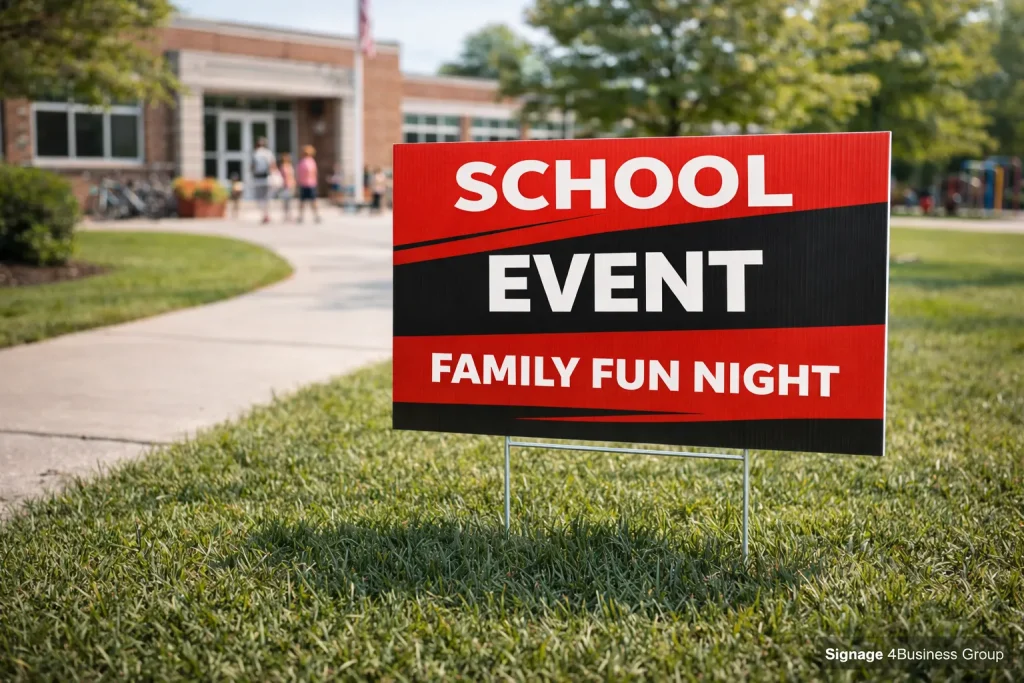
What Are Yard Signs Used For?
If you are asking what are yard signs used for, the answer is broad because they serve many industries and purposes.
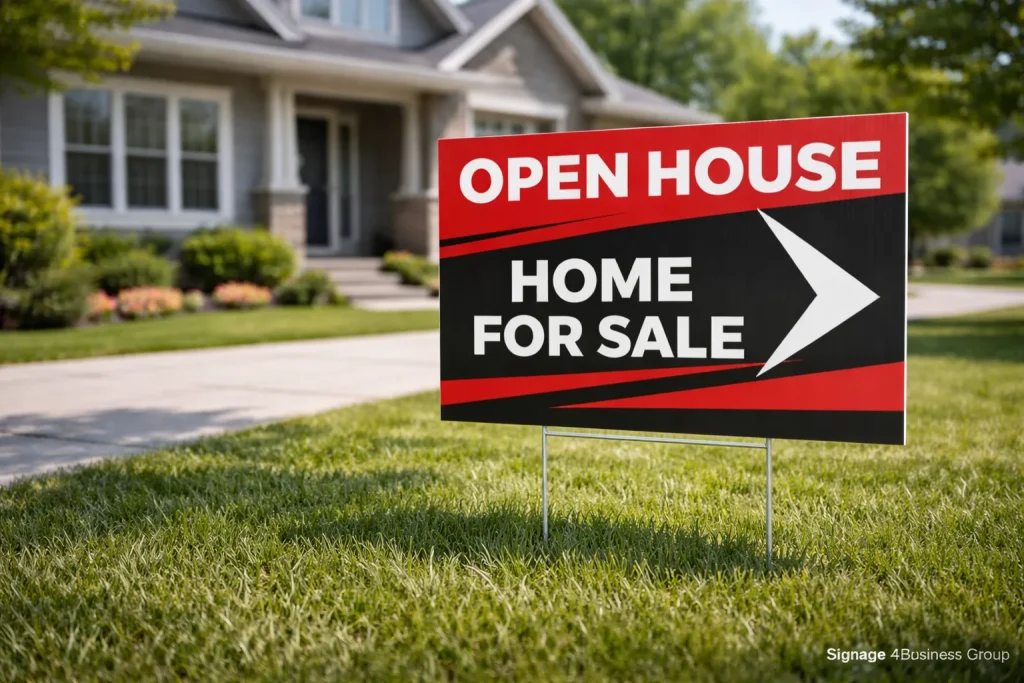
One of the most recognisable uses is in real estate. Real estate yard signs and real estate lawn signs are used to market properties, direct buyers to open houses, and reinforce agent branding. In this space, signs do more than display “For Sale.” They support real estate marketing by creating neighbourhood awareness and helping buyers connect a location with an agent or brokerage.
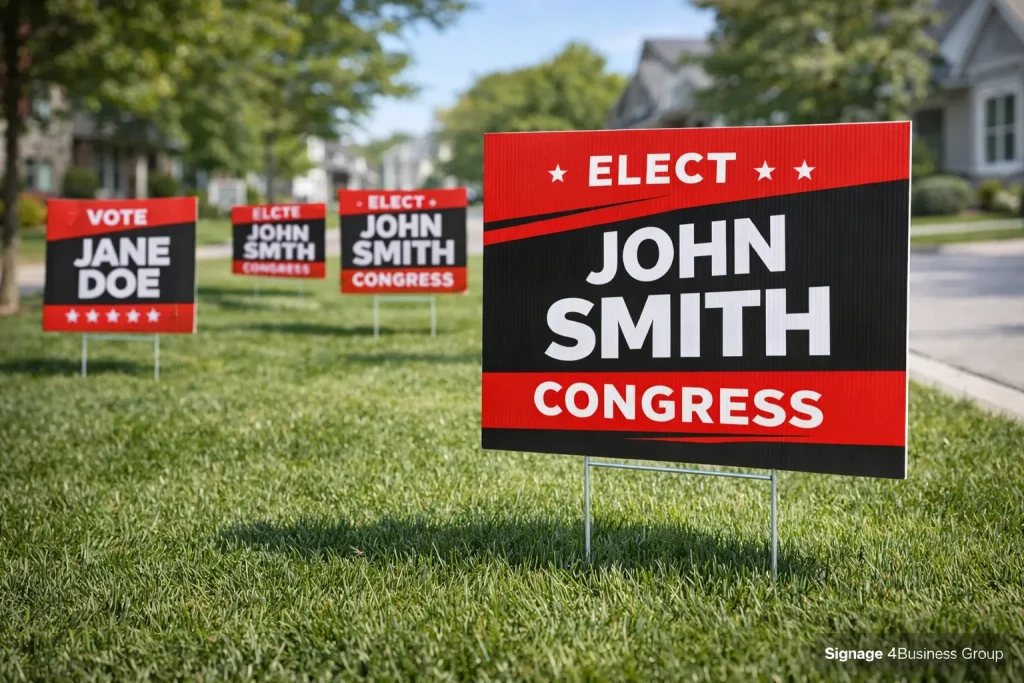
Politics is another major category. Political yard signs and campaign yard signs help candidates build visibility within communities. They are a classic part of political campaign marketing, especially in local and regional races where name recognition matters. Even when they do not persuade every voter, they reinforce familiarity and show public support.
For companies and entrepreneurs, business yard signs are a powerful tool for small business marketing. Contractors, landscapers, cleaning services, tutors, daycares, and local retailers often use yard signs for small business promotion because they deliver direct neighbourhood exposure. When placed strategically and legally, they can function as local advertising signs that generate awareness without the recurring cost of online ads.
Yard signs are also widely used for promotions and events. Promotional yard signs, event yard signs, and outdoor promotional signs help advertise festivals, school functions, grand openings, fundraisers, local sales, and community gatherings. Many organisers also use directional yard signs to guide attendees to parking lots, entrances, or registration areas.
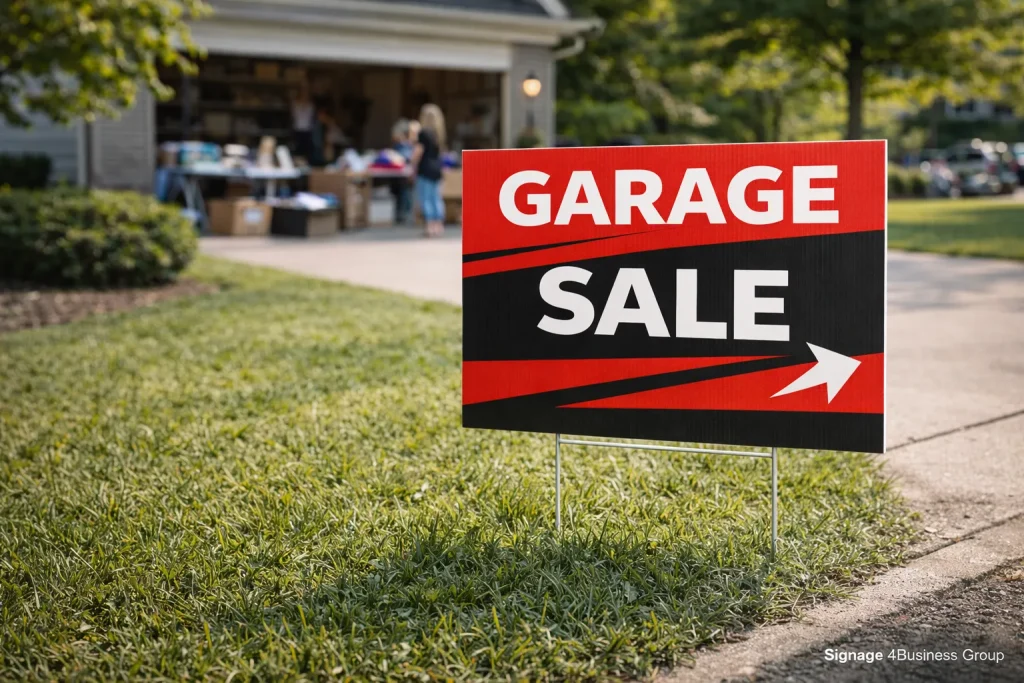
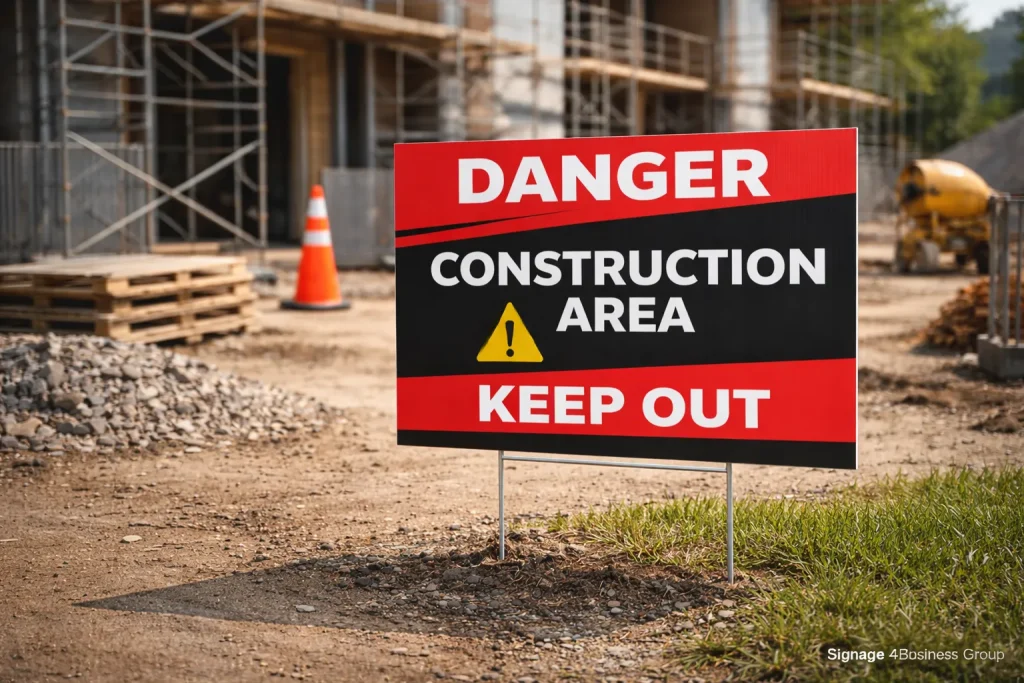
There are also highly practical niche uses. Garage sale yard signs help attract traffic for personal sales. Yard signs for advertising can announce seasonal specials. Service providers use them as temporary outdoor signage to claim visibility near active job sites. In all of these cases, printed yard signs work because they put a short message in front of real people in a real location.
Why Yard Signs Still Matter in Modern Marketing
Some people assume that offline advertising is outdated. In reality, yard signs remain relevant because they serve a different purpose than digital channels. They are not meant to replace search ads, social campaigns, or email marketing. Instead, they support offline marketing and extend your presence into the physical world.
This is where signage marketing becomes valuable. A business can run online ads all day, but if nobody in the neighbourhood recognises the brand, its impact may stay limited. Yard signs bridge that gap. They strengthen brand awareness, improve high-visibility signage in a local area, and create repeated exposure over time.
Think of yard signs as a street-level reminder. A person may pass the same sign several days in a row. That repeated exposure can improve recall, increase trust, and support other marketing efforts. This is especially useful in street-level advertising, where placement close to homes, roads, and local foot traffic can influence immediate action.
In that sense, yard sign marketing is not just about putting a sign in the ground. It is about using a visible, low-cost medium to support promotional signage, increase local awareness, and contribute to better marketing ROI. When used correctly, yard signs are one of the most accessible forms of marketing materials available to small organisations and neighbourhood-focused brands.
Types of Yard Signs
If you are exploring the types of yard signs for business or community use, it helps to divide them by purpose and construction.
Real Estate Signs
Real estate yard signs are among the most common. These signs promote homes for sale, lease listings, and open houses. They often include the agent’s name, contact details, brokerage branding, and sometimes extra rider panels for status changes such as “Open House” or “Sold.”
Political and Campaign Signs
Political yard signs and campaign yard signs are designed to maximise visibility while keeping the message short. Usually, they feature a candidate’s name, office, slogan, and party affiliation or election cycle. Their main value lies in recognition and visible support.
Business and Service Signs
Business yard signs are used by local service providers and small companies. Landscapers, roofers, painters, moving services, and home improvement professionals often rely on yard signs for advertising in neighbourhoods where they already work. These signs can be surprisingly effective for small business marketing because they target nearby prospects.
Promotional and Event Signs
Promotional yard signs and event yard signs help advertise grand openings, fundraisers, school events, religious gatherings, fairs, and seasonal sales. They are ideal for short-term announcements that need immediate attention.
Directional Signs
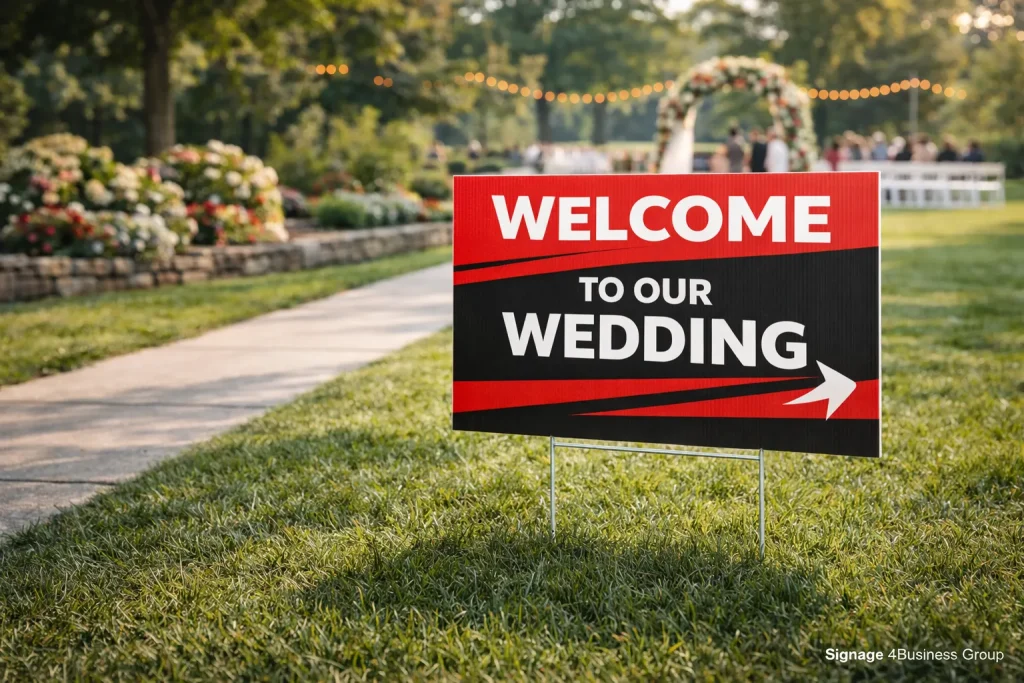
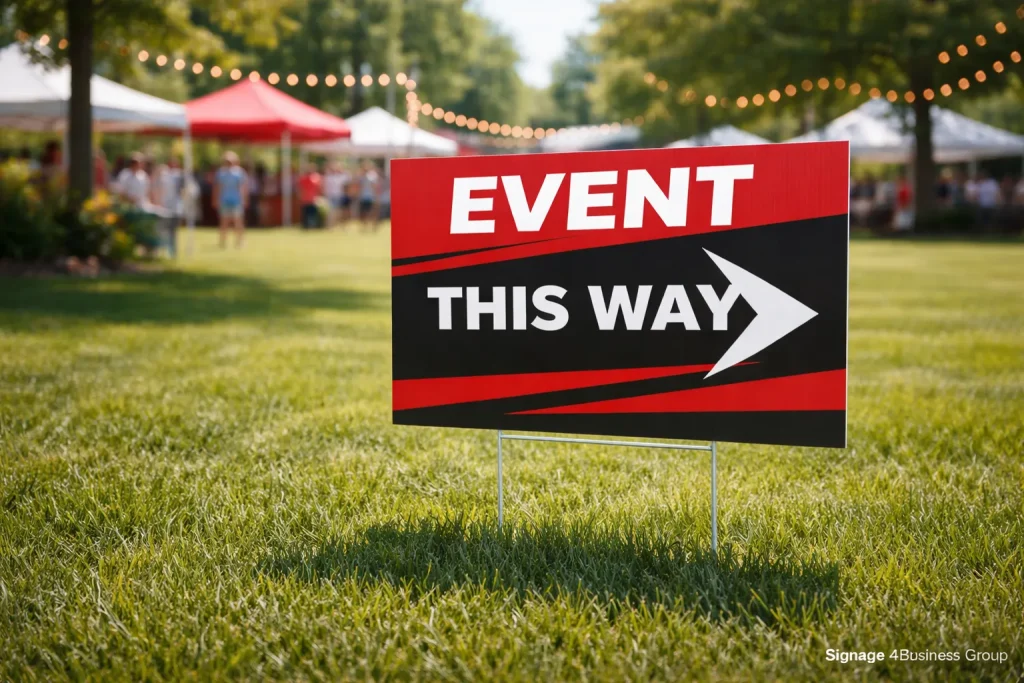
Directional yard signs are used to lead people toward a destination. They often include arrows and concise instructions. You will see them at weddings, conferences, open houses, festivals, and temporary venues.
Garage Sale and Community Signs
Garage sale yard signs are simple but highly effective. Community groups, schools, churches, and nonprofits also use lawn signs to announce activities and encourage participation.
Materials Used in Yard Signs
When people ask about yard sign materials or the best materials for yard signs, they are usually trying to balance cost, appearance, and durability.
The most common material today is corrugated plastic. Corrugated plastic yard signs are lightweight, weather-resistant, and cost-effective. They are often chosen for temporary campaigns and local promotions because they are easy to print, easy to transport, and simple to install. Many outdoor yard signs fall into this category.
These signs are commonly paired with stakes, making yard signs with stakes one of the most popular formats on the market. In many cases, businesses also refer to them as H-frame yard signs, especially when they are mounted with metal stake supports.
For users who want a more durable option, metal yard signs can be a strong alternative. They often cost more but provide greater sturdiness and can hold up well in demanding conditions. They are a better fit when long-term use matters more than low upfront cost.
Other materials can include PVC, aluminium, foam board, or specialty composites, but corrugated plastic remains the dominant choice for printed temporary use. That is why durable yard signs are often judged not just by the material itself, but also by their thickness, print quality, weather exposure, and mounting method.
Common Sizes and Printing Options
Yard signs come in many dimensions, but some sizes are more common than others. The standard choice for many campaigns and business uses is 18 x 24 inches. It is large enough to be readable from a distance but still compact enough for easy placement.
Smaller signs may work for directional use or closely viewed settings, while larger signs may be used where speed, distance, or open space requires more visibility. The right size depends on where the sign will be placed and how quickly people need to read it.
Yard sign printing is another important factor. Businesses today can order printed yard signs in bulk or in small custom runs. This flexibility makes custom yard signs accessible even for smaller campaigns. Whether you need one design or many variations, custom printing allows you to tailor the message, layout, and branding to fit your exact audience.
That is also why affordable yard signs are so popular. Modern printing has reduced the cost barrier, making it possible to produce high-quality signs for short-term and local campaigns without a major investment.
How Yard Signs Help Local Marketing
If you are wondering how yard signs help local marketing, the answer lies in visibility, repetition, and geography.
Unlike many other forms of advertising, yard signs place your message directly in the neighbourhoods and streets where your audience already lives or travels. That makes them a strong tool for local marketing strategy, especially when your goal is awareness within a specific radius.
For a small business, this can mean more phone calls, more inquiries, or simply more recognition. A sign outside a completed landscaping project, roofing job, or renovation site acts as a silent promotion. It tells nearby residents who did the work and reminds them that the service is available locally.
This is where brand visibility and brand awareness become practical, not abstract. A visible sign placed in the right location can support signage marketing, reinforce your message, and keep your business top of mind. In many local contexts, that repeated physical presence is as valuable as a digital impression.
Yard signs also work well as affordable marketing tools because they combine low production cost with strong local relevance. For businesses that cannot spend heavily on large campaigns, signs can still produce real exposure and support measurable marketing ROI.

Benefits of Yard Signs
The benefits of yard signs advertising are easier to understand when you look at the needs of local organisations.
First, they are affordable. Compared with many media channels, yard signs offer a low-cost entry point for local promotion. This is especially helpful for startups, campaigns, schools, nonprofits, and neighbourhood businesses.
Second, they are easy to produce and install. Most yard signs with stakes can be set up quickly without special equipment. This makes them ideal for fast campaigns or temporary announcements.
Third, they are highly local. Yard signs are perfect for businesses that depend on nearby customers. A sign in the right place functions as a direct local signal rather than a broad, unfocused message.
Fourth, they create repeated exposure. A sign that stays visible for days or weeks can build familiarity in a way that one-time advertising often cannot.
Fifth, they support multiple goals. They can be used for event promotion, promotional signage, community advertising, real estate marketing, political messaging, or neighbourhood service awareness.
Finally, they are flexible. Whether you need custom yard signs, custom lawn signs, or simple directional signs, the format can adapt to many purposes with very little friction.
How to Design Effective Yard Signs
If you want to know how to design effective yard signs, start with one principle: people must be able to understand the message almost instantly.
A yard sign is not a brochure. It is not a webpage. It is a fast-read tool. That means the wording should be short, the layout clean, and the message obvious.
Use a strong headline or main phrase. Keep the number of words low. Choose fonts that are easy to read from a distance. Contrast matters, so dark text on a light background, or the reverse, usually works well. This is especially important for high-visibility signage placed near roads.
Good yard sign design ideas often include one main message, one visual cue, and one call to action. For example, a business sign might use a brand name, service category, and phone number. A real estate sign might focus on “For Sale,” the agent’s name, and contact details. An event sign may need only the event name, date, and arrow.
Avoid clutter. If the sign includes too much text, people will ignore it because they cannot read it quickly. Strong design improves visual communication and makes the sign more effective as outdoor advertising.
Placement Tips for Better Results
Smart placement can make or break a sign campaign. That is why yard sign placement tips matter just as much as design.
The first rule is visibility. Signs should be easy to see from the road, sidewalk, or entrance point they are meant to influence. Blocking them behind landscaping, parked cars, or competing signage reduces their value.
The second rule is relevance. Put the sign where the intended audience actually passes. For example, real estate yard signs should be positioned to catch local traffic near the property. Service businesses should place signs where neighbourhood residents can notice them. Events should use directional yard signs at decision points such as turns, entrances, and parking areas.
The third rule is readability distance. If people are driving past quickly, the sign must be large enough and simple enough to be read in seconds.
The fourth rule is compliance. Sign placement is not just a design issue; it is often a legal one. Different cities, neighbourhoods, and property owners may have different sign placement regulations. Always place signs on permitted property and follow local rules.
Legal and Practical Considerations
Yard signs may be simple, but they are not law-free. Many communities regulate temporary sign use, especially in public rights-of-way, intersections, or residential areas. This is why temporary outdoor signage should always be treated responsibly.
For example, a sign placed on private property with permission is often more acceptable than one placed on public land without authorisation. Businesses, political campaigns, and event organisers should review local codes before large sign deployments.
This is particularly important for political yard signs, campaign yard signs, real estate signage, and business promotions. In some areas, rules may affect size, timing, setback, location, or removal deadlines.
From a practical standpoint, the weather also matters. Wind, heavy rain, sun exposure, and ground conditions can affect performance. That is why material quality, print durability, and proper stakes all matter when choosing durable yard signs.
Yard Signs as Part of a Bigger Marketing Strategy
Yard signs work best when they support a larger plan. They are excellent on their own for awareness, but they become more powerful when combined with digital channels, referrals, direct mail, and local outreach.
For a business, a sign may reinforce the same message seen on social media. For a political candidate, it may complement canvassing and events. For a real estate agent, it may support listing websites, open-house promotion, and neighbourhood branding.
This is the real value of signage marketing. It turns a simple printed object into part of a broader local marketing strategy. It helps connect online and offline behaviour. Someone may notice a sign while driving, then search the brand later. In that sense, yard signs create physical impressions that can trigger digital action.
Because of this, they remain one of the most effective marketing materials for organisations that need a local presence without excessive cost.
Common Mistakes to Avoid
Even though yard signs are simple, many people use them poorly.
One common mistake is using too much text. If the sign looks crowded, people will not read it. Another is weak contrast or small fonts, which reduces visibility. A third is poor placement, such as putting signs where nobody relevant will see them.
Another mistake is choosing the wrong material. If you need a temporary promotion, corrugated plastic yard signs may be perfect. But if you need longer-term exposure, metal yard signs may be more appropriate.
Businesses also make mistakes by failing to brand clearly. A sign should not just attract attention; it should communicate who you are. That is where consistent use of logo, colour, and contact details supports brand awareness and brand visibility.
Finally, some campaigns fail because they ignore local rules. Effective signs are not only visible; they are also properly placed and legally compliant.
Are Yard Signs Still Worth It?
Yes, absolutely—when used for the right purpose.
Yard signs are not a magic solution, but they remain one of the most practical tools for local advertising signs, promotional signage, and targeted neighbourhood visibility. They are especially useful when you need fast deployment, clear messaging, and affordable reach in a defined local area.
That is why they continue to matter for small business marketing, real estate marketing, community outreach, and event promotion. They are simple, but simplicity is often their greatest strength.
Conclusion
Yard Signs remain one of the most practical and cost-effective tools for local advertising, community promotion, and brand visibility. From real estate yard signs and political yard signs to business yard signs and event yard signs, they continue to help organisations communicate directly with local audiences in a simple but powerful way.
When designed clearly and placed strategically, yard signs can strengthen offline marketing, improve neighbourhood awareness, and support long-term brand recognition. Businesses that want reliable outdoor promotional signs often rely on experienced signage providers to ensure quality materials, effective design, and professional printing.
At Signage 4Business Group, we understand how impactful well-designed signage can be for local marketing and business visibility. By focusing on high-quality custom yard signs, durable materials, and effective design, Signage 4Business Group helps businesses and organisations turn simple signage into powerful marketing tools.
Frequently Asked Questions About Yard Signs
Yard Signs are commonly used for local advertising, event promotion, political campaigns, real estate listings, and community announcements. Businesses often use business yard signs and promotional yard signs to attract nearby customers, while homeowners and organisations use them for events, garage sales, or neighbourhood communication.
Most outdoor yard signs are made from corrugated plastic yard signs, which is lightweight, weather-resistant, and affordable. Some durable yard signs may also be made from aluminium, PVC, or other rigid materials, depending on how long the sign needs to last outdoors.
The most common size for custom yard signs and lawn signs is 18 × 24 inches. However, printed yard signs can also be produced in other sizes, such as 12 × 18 inches or 24 × 36 inches, depending on the visibility needed and the placement location.
Yes. Yard signs for advertising can be very effective for a local marketing strategy because they provide high-visibility signage in neighbourhoods and high-traffic areas. For small businesses, especially, yard sign marketing helps increase brand awareness and attract local customers without high advertising costs.
The lifespan of outdoor yard signs depends on the material and weather conditions. Corrugated plastic yard signs typically last several months outdoors, while metal yard signs may last much longer. Proper placement and sturdy yard signs with stakes can also improve durability.
Rules for yard sign placement vary by city and region. In many areas, signs can be placed on private property with permission, but placing them on public land or roadways may require approval or may be restricted. It is always recommended to check local sign placement regulations before installing temporary outdoor signage.
Yes, most outdoor yard signs are designed to handle rain and outdoor weather conditions. Many corrugated plastic yard signs are water-resistant and durable enough for temporary outdoor use. However, extreme weather such as strong winds or prolonged sun exposure can affect how long the sign lasts.
Most yard signs with stakes use metal supports known as H-frame yard signs or wire stakes. These stakes slide into the fluted channels of corrugated plastic yard signs and are pushed into the ground to keep the sign stable. This simple system makes printed yard signs easy to install and remove when needed.
Yes, yard signs for small businesses are an effective and affordable marketing tool. They help improve brand visibility, support local marketing strategy, and provide street-level advertising in neighbourhoods where potential customers live. Many businesses use custom yard signs and outdoor promotional signs to promote services, sales, or special events.